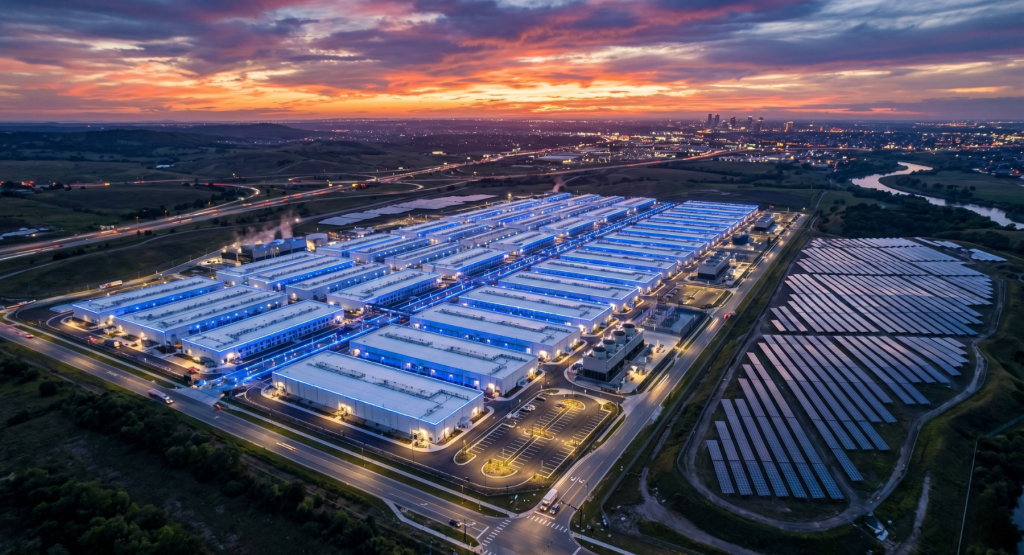
The data center power crisis is no longer a future risk. It is here. Driven by the explosive growth of artificial intelligence, machine learning workloads, and cloud computing, power demand from data centers is expected to more than double by 2030, according to the International Energy Agency. Grid operators are struggling to keep pace. Utilities in key markets are imposing multi-year wait times for new connections, and electricity costs continue to climb.
For operators managing campuses that consume tens or hundreds of megawatts, the math is unforgiving: every watt matters. And increasingly, the smartest operators are asking a question most of the industry has overlooked: why are we using precious grid power to light a parking lot?
Table of Contents
- Data Center Power Consumption Is Outpacing Grid Capacity
- The Data Center Power Crisis and Rising Electricity Costs
- Why Exterior Lighting Is the Overlooked Efficiency Win
- 5 Operational Benefits of Off-Grid Campus Lighting
- How Off-Grid Lighting Solves the Data Center Power Crisis for ESG
- Edge Facilities: Where the Data Center Power Crisis Hits Hardest
Data Center Power Consumption Is Outpacing Grid Capacity
The data center power crisis is driven by numbers that are staggering in scale. Training a single large language model can require as much electricity as powering thousands of homes for a year. Inference workloads add sustained baseload demand on top of that. For a deeper analysis, see our piece on how AI is breaking the data center power model.
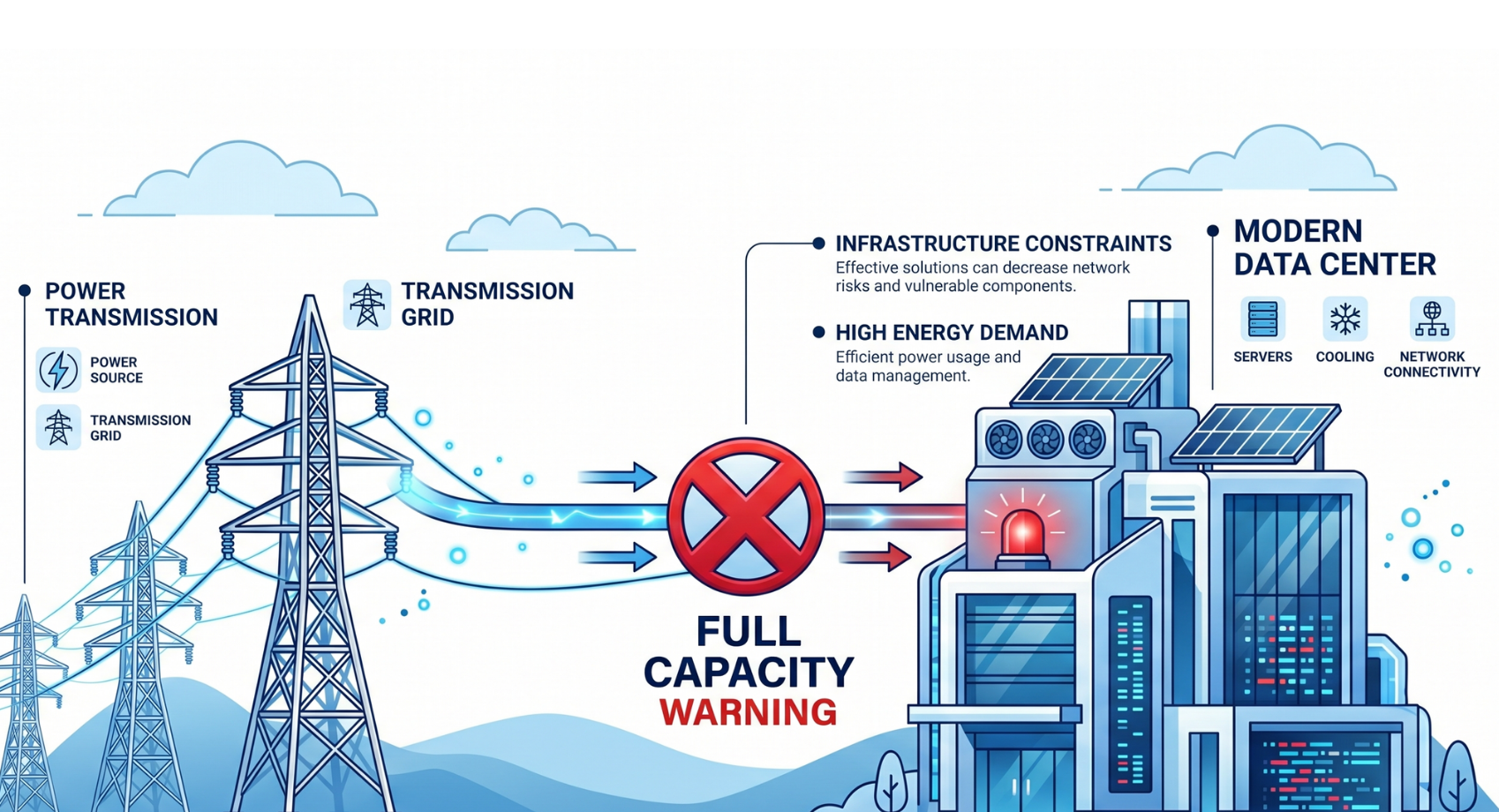
In Northern Virginia, the largest data center market in the world, Dominion Energy has acknowledged that new power requests far exceed its ability to build transmission infrastructure. Similar constraints are playing out in Dublin, Amsterdam, Singapore, and other major hubs. The result: power availability has overtaken land cost, tax incentives, and fiber connectivity as the most important factor in site selection. This is what we call the watt war.
The Data Center Power Crisis and Rising Electricity Costs
Even where grid power is available, the data center power crisis shows up in the economics. Electricity costs have risen substantially year over year across most major markets. This pressure has exposed an uncomfortable truth: a significant amount of energy is consumed by infrastructure that has nothing to do with computing.
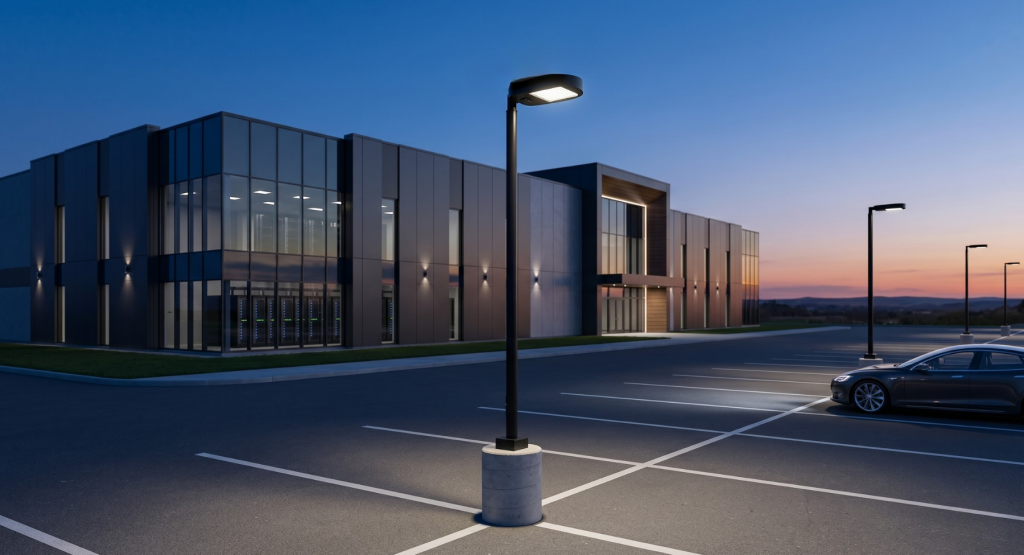
Exterior lighting for parking areas, access roads, perimeter security, signage, and walkways all draw from the same grid connection that powers servers. On a large campus, these loads add up to tens of kilowatts of continuous demand, and every one of those kilowatts is a kilowatt not going to compute. See our market-by-market cost comparison for the full picture.
Why Exterior Lighting Is the Overlooked Efficiency Win
The data center industry has become extraordinarily sophisticated at optimizing what happens inside the building. But exterior infrastructure has been treated as an afterthought. That is changing. Forward-thinking operators are recognizing that campus lighting is one of the easiest loads to take completely off the grid. For the full impact on PUE, the math is clear.
Smart off-grid solar lighting systems are purpose-built for this application. A complete solution like the Senti includes the panel, battery, controller, and luminaire in a single package requiring no trenching, no conduit, and no connection to the facility’s electrical infrastructure. Systems are managed remotely through the Illumience cloud management platform.
5 Operational Benefits of Off-Grid Campus Lighting
The data center power crisis makes every operational advantage count. Here are five reasons operators are moving campus lighting off-grid:
- Faster deployment. Off-grid solar lighting installs in days, providing immediate illumination while grid infrastructure is still being built.
- Reduced civil costs. No trenching, conduit, or electrical infrastructure. Our full cost comparison shows savings of 30-50% on installed cost.
- Campus flexibility. Off-grid solar fixtures can be relocated in hours as campus layouts change.
- Grid resilience. Perimeter security lighting stays on during grid outages when backup generators prioritize IT loads.
- Freed grid capacity. Every kilowatt removed from exterior loads can be reallocated to revenue-generating compute.
5 Operational Benefits of Off-Grid Campus Lighting
The data center power crisis intersects directly with sustainability commitments. Solar-powered campus lighting provides a clean, verifiable win: every kWh of solar energy used for a parking lot is a kWh that does not appear on Scope 2 emissions reporting. For operators building new campuses, this is a day-one ESG win without complex PPA negotiations.
The Energy as a Service model takes this further, converting capital expense into predictable operating expense. Learn more about how EaaS is reshaping data center lighting procurement.
Edge Facilities: Where the Data Center Power Crisis Hits Hardest
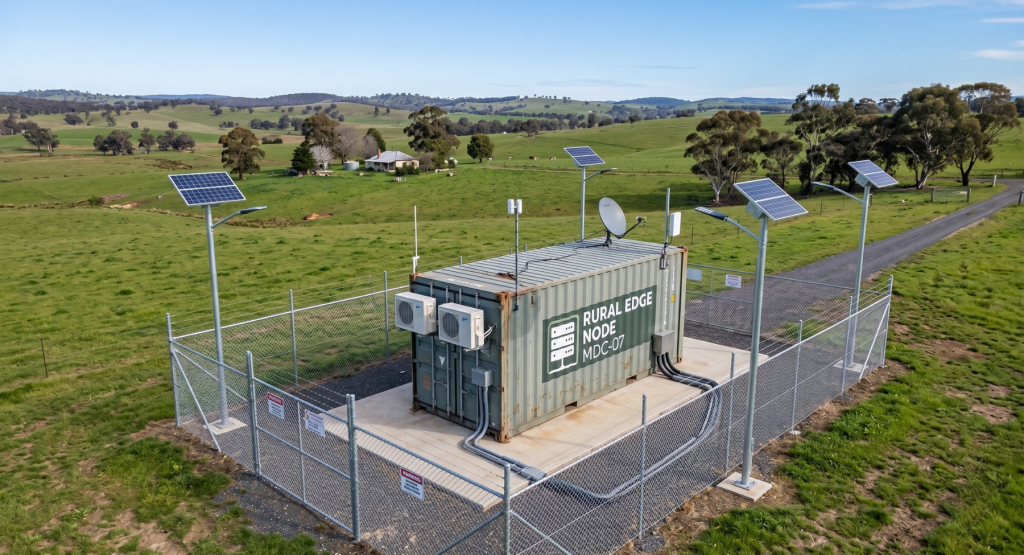
The data center power crisis is most acute at the edge. Smaller facilities in locations with limited grid infrastructure face disproportionate costs to extend utility connections for non-IT loads. For edge deployments, solar lighting for perimeter security, access roads, and signage is often the only practical option.
Companies with deep experience in powering mission-critical infrastructure in remote locations, like Clear Blue Technologies with over 5,000 systems across 55 countries, bring reliability engineering that consumer solar cannot match. See it in action across our global project portfolio.
The bottom line: the data center power crisis is not resolving itself. Operators who move non-core loads off the grid today will have more capacity for compute, lower costs, stronger ESG metrics, and more flexible campuses. The technology is mature. The economics are compelling. And the question is no longer whether to move campus lighting to solar, but why you would keep it on the grid at all.
Clear Blue Technologies (TSXV: CBLU) delivers clean, managed, wireless power for mission-critical infrastructure worldwide. Learn more at clearbluetechnologies.com.